
Epoxy Flooring Services in Chelsea, NY
Local Flooring Contractor Expertise
In Chelsea, converted lofts, prewar buildings, and modern high-rises need flooring that works. Whether you're managing a townhouse basement, a freight-elevator-accessed apartment, or a West Chelsea gallery space, we install epoxy and concrete flooring contractor services that handle the neighborhood's demanding environments. From garages hidden beneath brownstones near The High Line to industrial-chic residential spaces along Hudson River Park, our flooring contractor and concrete contractor teams bring Chelsea expertise to every project.
This page covers what to expect when upgrading concrete floors in Chelsea—how we work, why our approach fits this neighborhood, and why proximity matters when managing interior space from the gallery district to the residential core.
How We Work
A clear process keeps Chelsea projects on track—from initial site assessment to final cure, you know what's next.
Our Five-Step Approach
Every flooring project in Chelsea follows the same transparent framework. We assess your concrete, prepare the surface, apply epoxy, add color or flake design, and complete the cure with sealing.
Site Walk & Assessment
We inspect the concrete, test moisture levels, note cracks or damage, and discuss your vision—basement moisture in older Chelsea buildings is common, so we plan accordingly.
Concrete Prep & Repair
Grind the surface to remove old coatings, fill cracks, address spalling, and level low spots. This step is non-negotiable for epoxy adhesion and durability.
Primer & Base Coat
Apply epoxy primer and a base coat in your chosen color. We use moisture-mitigating primers for Chelsea basements prone to vapor transmission.
Design & Topcoat
For flake systems, we broadcast colored flakes for durability and slip resistance. For solid color, we apply a clear topcoat. Choose gloss, satin, or matte.
Final Cure & Walkthrough
We manage the cure process, keep your space sealed during hardening, and conduct a full walkthrough. Light use is OK after 24 hours; vehicle traffic after 72 hours.
You'll always know what's happening next—and why each step protects your investment.
Our Services
Epoxy and concrete flooring solutions designed for Chelsea's mix of residential lofts, gallery spaces, and multi-family buildings.
Residential Epoxy Flooring
Transform basement concrete, garage slabs, and kitchen floors in Chelsea townhouses and apartment buildings. Epoxy is harder-wearing than paint, waterproof, and resists oil and salt staining—essential for NYC basements.
- Garage epoxy: ideal for ground-level and sub-basement garages
- Basement flooring: moisture-resistant for older Chelsea buildings
- Decorative flake and solid colors in 15+ finishes
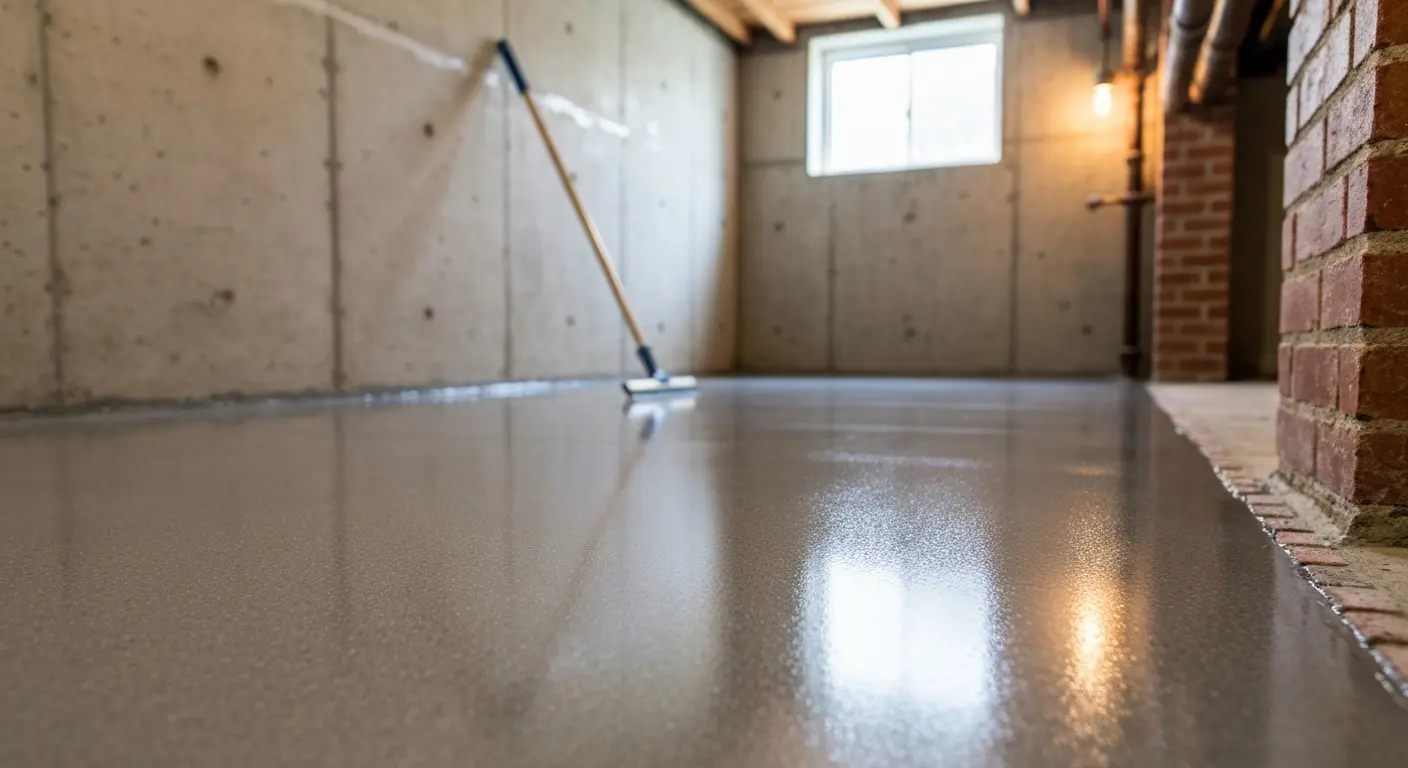
Epoxy-finished basement near The High Line with flake texture for durability
Commercial & Gallery Flooring
West Chelsea's gallery and retail district demands polished, professional floors. Epoxy and polished concrete work in high-traffic spaces, showrooms, and artist studios. Both systems tolerate foot traffic and are easy to keep pristine.
- Polished concrete: industrial-modern aesthetic for converted lofts
- Retail epoxy: chemical-resistant for food or retail spaces
- Gallery-grade finishes: custom stains and colors
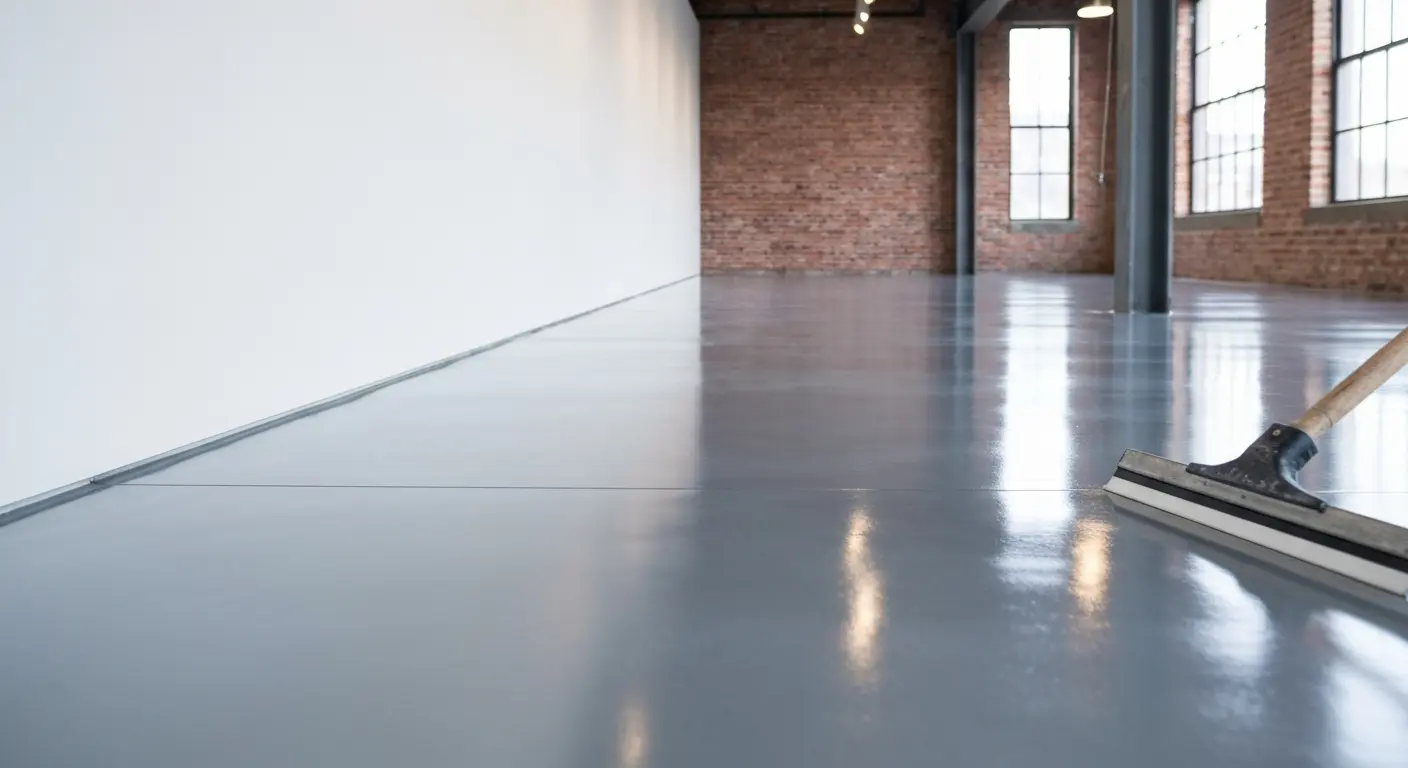
Polished concrete retail space on 10th Avenue, West Chelsea gallery district
Decorative Flake & Metallic Epoxy
Upgrade a plain garage or loft to something striking. Multi-color flake epoxy offers slip resistance and visual depth. Metallic systems create marble-look finishes perfect for feature spaces near the Chelsea Market or Hudson Yards area.
- Colored flakes: durable, slip-resistant, 20+ color combos
- Metallic epoxy: statement-making marble effects
- Custom patterns: staining, logos, and design integration
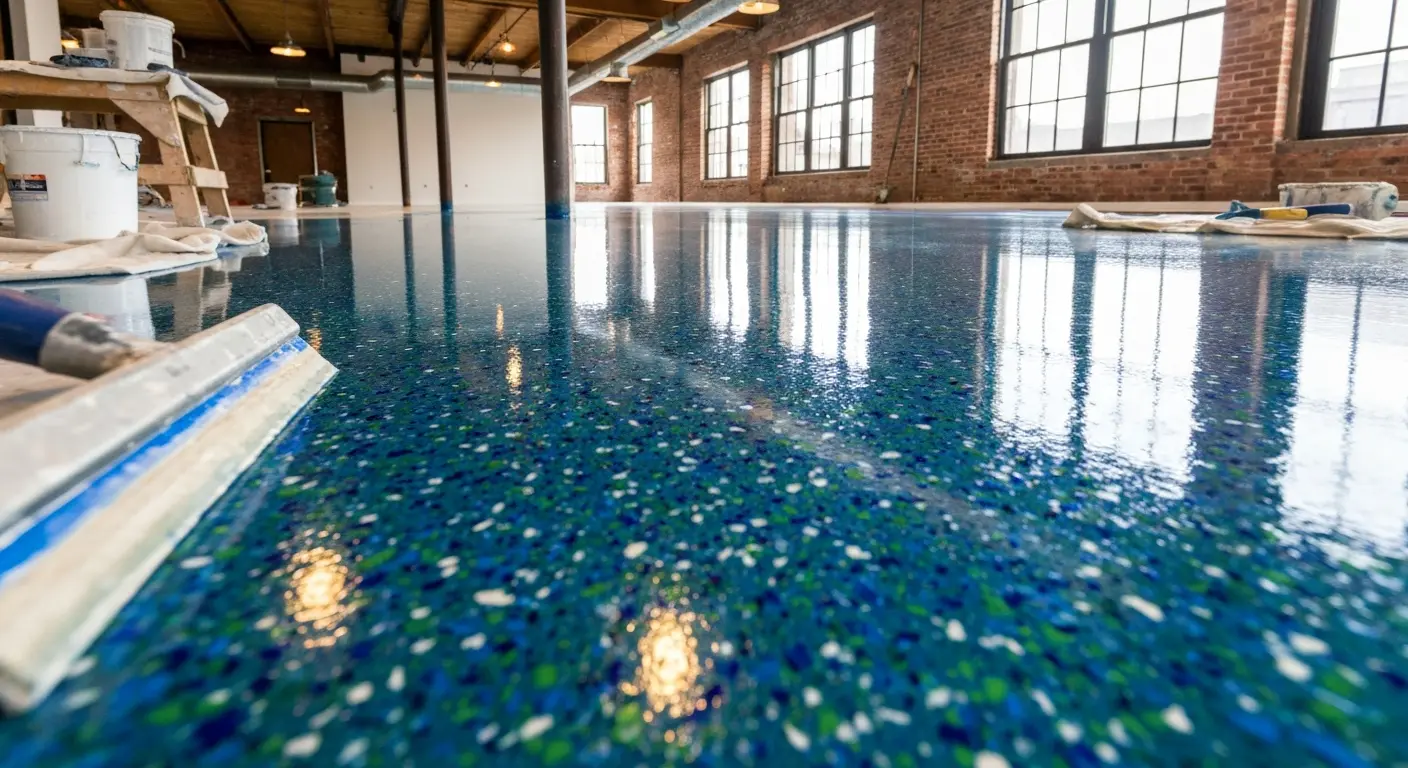
Multi-color flake epoxy in a residential loft, West Chelsea industrial-chic building
All epoxy flooring is VOC-compliant, meeting NYC environmental standards, and backed by warranty documentation for peace of mind in Chelsea properties.
Why Local Expertise Matters in Chelsea
Building Age & Moisture Challenges
Chelsea mixes 1890s tenements and Victorian rowhouses with mid-century lofts and new high-rises. Prewar basements are prone to vapor and capillary moisture. We test every job and use moisture-mitigating primers where needed—a critical step older buildings require.
Logistics & Freight Access
Many Chelsea garages and basements are accessed via freight elevator or narrow stairwells. We coordinate material delivery, manage narrow entry points, and handle the realities of interior access—no surprises on-site. Chelsea's walkable blocks often have limited street parking, so we plan crew arrival carefully.
Building Rules & Quiet Hours
Many Chelsea apartment buildings restrict noise and power tools to specific hours. Co-ops often require advanced notice and proof of insurance. We're familiar with these requirements and schedule work to comply—evening and weekend grinding is common in Chelsea buildings.
Chelsea-specific insight: The area between 8th and 10th Avenues (West Chelsea) is known for converted industrial buildings and lofts with spacious concrete slabs—ideal for polished concrete or dramatic metallic finishes. The residential core east of 9th Avenue has older brownstones with basement access via interior stairs or loading areas. Each context calls for a different approach.
Serving Chelsea & Nearby Areas
We service Chelsea's entire footprint—from 14th Street to 30th Street, west to the Hudson River and east to 6th Avenue.
Why Proximity Helps
We understand Chelsea's grid, subway access, and building culture. Fast response times for inspections, flexible scheduling around building rules, and local knowledge of which contractors and inspectors know the Chelsea standards—these save money and headaches.
Our Footprint in Chelsea
From townhouses near The High Line to basements under retail on 8th Avenue, gallery lofts west of 10th Avenue to co-op garages near Madison Square Garden—we've worked on Chelsea's full spectrum of residential and commercial floors.
West Chelsea (Gallery District)
Converted warehouses, art galleries, and retail between 10th–12th Avenues. Polished concrete and high-gloss epoxy popular here.
Chelsea Core (East of 9th Ave)
Residential brownstones, co-ops, and older apartment buildings. Basement and garage epoxy most common.
Hudson Yards Proximity
Modern luxury buildings near West 30th Street. Epoxy and polished finishes for garages and common areas.
Ready to upgrade your Chelsea floor? Call today for a free site inspection and estimate. We'll walk your space, discuss moisture and access, and outline options with timelines and warranty details.
Frequently Asked Questions
What is epoxy flooring, and how does it differ from polished concrete?
Epoxy is a resin coating applied to concrete to create a durable, waterproof layer. Polished concrete uses the slab itself—ground and sealed to a high shine. Epoxy works better for moisture-prone basements; polished concrete suits industrial lofts where exposing original slab character is desired.
Are epoxy floors slippery when wet?
Glossy epoxy can be slick when wet. We add silica or aluminum-oxide grit to the topcoat for slip resistance—especially important in garages, kitchens, and commercial spaces. Request a matte or textured finish for maximum grip.
How do I prepare my building for epoxy installation?
Notify your building management, clear the space of vehicles or items, and arrange for any required building permits or certificates of insurance. We handle surface grinding and prep—you ensure access and allow cure time before heavy use.
Do I need moisture testing before epoxy is applied?
Yes. Chelsea's older basements often have vapor transmission. We test every slab; if readings are high, we apply a moisture-mitigating primer to prevent future adhesion failure. This extra step protects your investment in prewar buildings.
Can I drive on an epoxy garage floor right after installation?
Light foot traffic is fine after 24 hours. For vehicle tires, wait 72 hours for the epoxy to fully cure. Ambient temperature affects curing speed, so cold weather may extend this window slightly.
What warranty comes with the flooring?
We provide standard 10-year material and workmanship warranty. Warranty validity depends on proper prep, moisture control, and adhering to post-cure protocols. All documentation is provided at project completion.
DISCOVER WHAT OUR CUSTOMERS HAVE TO SAY ABOUT US
REVIEWS
proudly serving these areas
Astoria, NY
Battery Park, NY
Beacon Hill, NY
Bensonhurst, NY
Bloomingdale, NY
Bronx, NY
Brooklyn, NY
Brownsville, NY
READY TO take the next step?
get a free quote TODAY!
COMPANY
(347) 926-8709
QUICK LINKS
our services
service areas
operating HOURS
Mon: 9:00 am - 7:00 pm
Tue: 9:00 am - 7:00 pm
Wed: 9:00 am - 7:00 pm
Thu: 9:00 am - 7:00 pm
Fri: 9:00 am - 7:00 pm
Sat: 9:00 am - 7:00 pm
Sun: 9:00 am - 7:00 pm